Oxford Street Will Be Pedestrianised Next Month
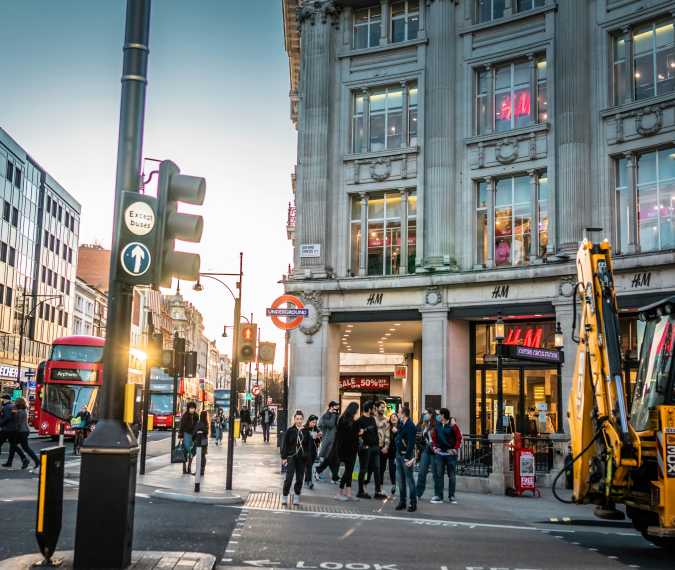
One of London’s busiest and best-known shopping streets is about to undergo a major transformation. After years of discussion, plans to pedestrianize part of Oxford Street are finally moving forward, with the first traffic-free section expected to arrive in the second half of October.
The project will initially focus on approximately one kilometer of Oxford Street, stretching from Orchard Street to Great Portland Street. This includes Oxford Circus, the famously busy intersection where Oxford Street meets Regent Street.
Under the plans, regular road traffic will no longer be allowed through this central section. Cars, taxis, buses, bicycles, scooters and pedicabs are all expected to be excluded, while emergency vehicles will continue to have access.
Delivery and service vehicles will also be permitted during a limited overnight window, between midnight and 7 am.
What will change on Oxford Street?
The Oxford Street Development Corporation (OSDC), established by London Mayor Sadiq Khan to help deliver the long-discussed redevelopment of the area, is overseeing the transformation.
Preparatory work has now started, and the OSDC is aiming to close the selected stretch of Oxford Street to general traffic during the second half of October, provided the necessary approvals and permissions are secured.
Although Oxford Street has previously experienced temporary traffic restrictions, the new scheme represents a much more significant move towards permanent pedestrianization.
During the initial phase, visitors can expect to see temporary seating, planters and security bollards installed along the street. Raised sections of the existing carriageway are also planned as the area begins functioning more like a pedestrian plaza than a major traffic route.
The changes will initially operate as a live trial. The new layout is expected to be monitored and assessed through spring 2027 before a decision is made on whether to make the pedestrianization permanent.
Buses and traffic will be redirected.
Removing vehicles from such a busy part of central London will inevitably affect the surrounding road network.
Bus services that currently travel along this section of Oxford Street are expected to be redirected via nearby roads, including Wigmore Street and Henrietta Street. Other vehicles will similarly need to use alternative routes around the pedestrianized zone.
The proposed traffic restrictions would cover the section running roughly from the western side of Selfridges to beyond IKEA Oxford Street.
The aim is to create a safer and more pleasant environment for pedestrians while giving one of London's most famous retail districts a new lease of life. Longer term, the pedestrian space could also host events and other public experiences.
Not everyone is convinced.
The project has also raised concerns about what happens to traffic once it is removed from Oxford Street.
Westminster City Council has called for a full environmental impact assessment, citing potential consequences for neighboring streets. Among the issues being considered are increased traffic, additional noise and changes to local air quality as vehicles and buses are diverted elsewhere.
For visitors, however, the changes could dramatically alter the experience of exploring this part of the West End. Oxford Street has long been associated with packed pavements, buses, taxis and heavy traffic. Removing most vehicles would create significantly more space for people walking between its shops, department stores and nearby attractions.
If the trial proves successful, the traffic-free stretch could eventually become a permanent feature of central London — marking one of the biggest changes to Oxford Street in decades.